Last month we had a couple groups on that were massive fish nerds. Like we’re talking everyone was finding the Fish of the Dive, and we were making it HARD. They even found the single indigo Hamlet that lives at Victory Reef. We had a ball with another group despite getting weathered in behind Bimini, snorkeling the mangroves and seeing weird snappers and baby barracudas. This gave the crew an opportunity to really get to know our Fish ID books. And some of the fish we found were definitely not “supposed to be there” according to the books. So we submitted some surveys to REEF.
This photo might not look like much, but it is from the first officially-reported sighting of a Yellow Cheek Wrasse in the Bahamas, made by us! We had to send proof to the Reef Fish ID folks, and unfortunately all we had was this terrible photo from a GoPro video. When we initially sent our fish survey in they literally said “Are you sure…? That’s definitely outside their reported range…”
Fishes’ geographical ranges are changing right before our eyes. Just 5 years ago, you couldn’t find an Indigo Hamlet north of Orange Cay. Now they’re showing up off Cat. We think we’ve also seen Bluestriped Dartfish near Ocean Cay but need to get photo evidence of that one before we’re truly sure.
So why does any of that matter? Range reports give ecologists valuable information on fish distribution, and when we know that they’re moving, we start to ask why. Is their food source also moving? Is the water temp causing a shift? Are the currents increasing distribution? Or is this just a one-off transient fish?
Small things can predict larger trends, and you can help by participating in this years Great Annual Fish Count with REEF. No matter what trip you’re on, you can submit data for basically any part of the world. And get to know the fish better! Win win!
https://julietsailinganddiving.com/wp-content/uploads/2024/07/2024-07-Juliet-Keys-195-scaled.jpg17072560Juliet Sailing and Divinghttps://julietsailinganddiving.com/wp-content/uploads/2020/10/juliet-logo-dark.pngJuliet Sailing and Diving2024-07-30 09:43:062024-07-30 09:44:05Nerding out on Fish ID
I was just having an email conversation with a customer trying to convince their shop owner to do another trip on Juliet. The shop always wants to go to crazy exotic places. But this customer is perfectly happy with the old faithfuls closer to home. It got me thinking…is that why you all keep coming back?
I’ve spent quite a lot of this Spring traveling: five trips to Bimini on Juliet, and 2 weeks in Indonesia, and about to head out to the Keys. And you know where I can’t wait to get back to? Bimini. Where I learned to dive 22 years ago, where I’ve logged 2000 of my 2500 dives, where I spent five of the past 10 weeks, a place you would think I’d be totally sick of by now. But last week, we saw two juvenile yellowcheek wrasses in the Gingerbread Grounds (can you find it in the admittedly terrible photo above?) and one adult on Sponge Gardens. We saw Bucktooth Parrotfish in the grass around the Sapona! And we snorkeled the beautiful mangrove ecosystem of East Wells (which may be taken away soon due to upcoming resort development on the island). I got barked at by a Goliath Grouper! And I didn’t get a picture of that blue dartfish to prove they’re everywhere on my REEF.org Fish Survey.
This kind of familiarity is what we hope keeps all of you coming back. The crew know the dive sites like the backs of our hands. And we pass that unique knowledge down to you (whether you want to nerd out with us or not!). And we don’t really separate ourselves from passengers the way other operations might, when you’re here, you’re family. Does that make us the Olive Garden of Dive Ops? I guess it could be a worse analogy… we could be Arby’s.
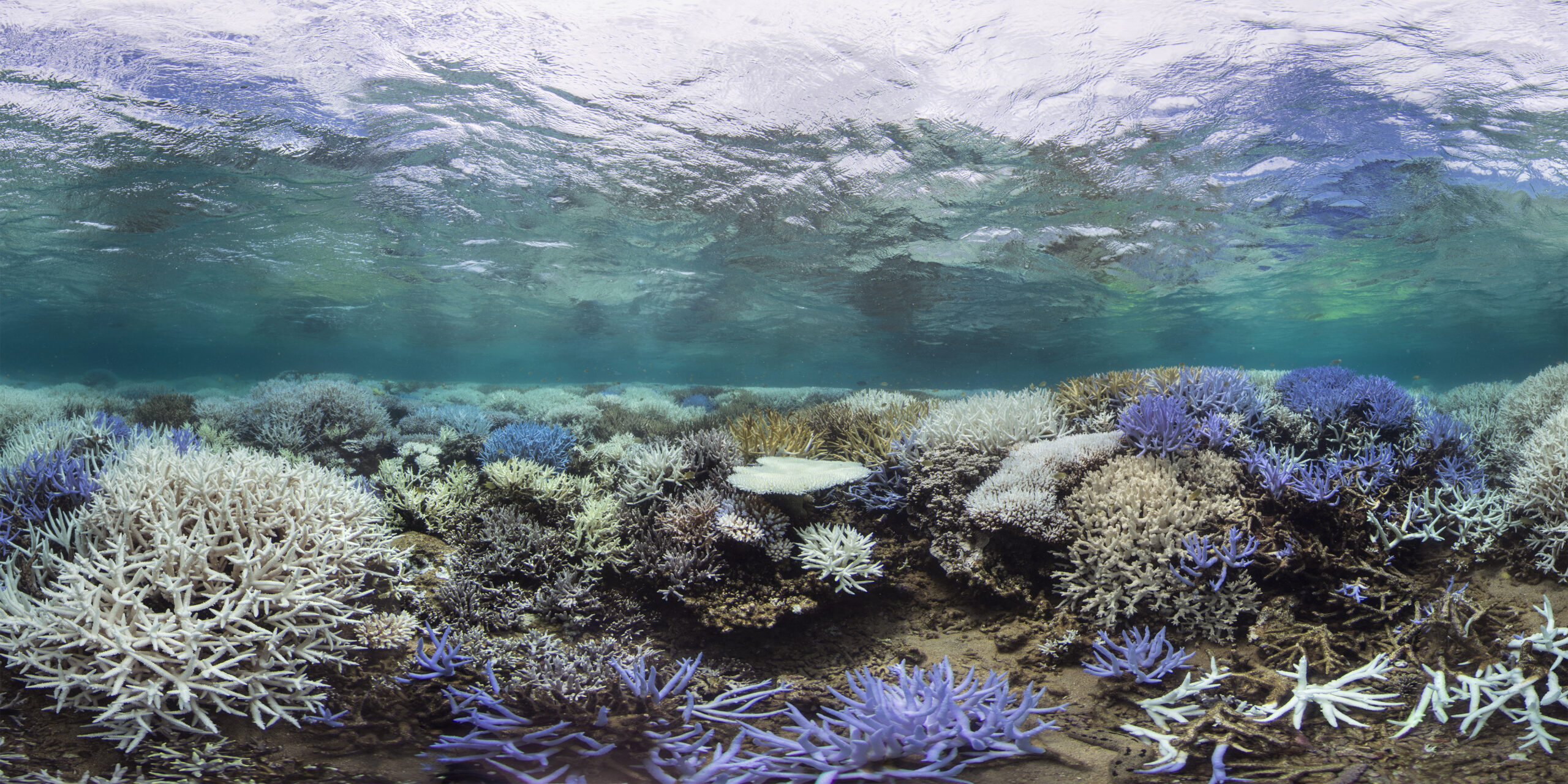
These areas, these dive sites, the boat, the crew, it all feels like home, like family. At times it’s heartbreaking to watch the reefs change, moorings ripped out by cruise ships, increased trash on the reefs over the years, coral diseases and massive coral bleachings like last fall’s event, localized declines in apex predators in certain areas…
But it’s also amazing to watch the reefs rebound from those bleaching events, looking healthy as ever. I found an Indigo Hamlet on Rainbow Valley that 20 years ago you never saw north of Orange Cay. And we now tell divers to look out for the resident Goliath groupers at three of our dive sites! It all bounces back and the familiarity is what let’s us recognize those changes, good or bad.
Is that why you come back? Or is it the food? It’s the food, isn’t it. No? The cats, then…
Rico and Suave on deck
PS: If this got you thinking about how much you love fish ID, don’t forget next month is the Great Annual Fish Count with REEF. Sign up and submit your data!
While many of us started diving to see “The Big Stuff” like sea turtles, sharks, and rays, as we continue diving we all begin to appreciate the underwater world as a whole. That school of fish that moves like one fluid organism, the tiny shrimp tucked in underneath the tentacles of the anemone it calls home. From large to minuscule, not much of what we’ve grown to love underwater would exist if it weren’t for the tiniest members of the community – the corals.
Corals form the literal backbone of the tropical underwater world. These tiny organism build massive structures that most of the rest of the ecosystem uses for shelter and sustenance. But ever since the scientific community started studying corals, there have been threats and diseases and challenges that these little tiny creatures are constantly having to overcome. Maybe you’ve seen some of them.
The coral affliction most are familiar with is Coral Bleaching. This is not a specific disease but a stress reaction affecting first the resident algae that co-habitate with the coral polyps. Each species of coral has a mutalistic relationship with an algae that lives within the polyp’s actual tissues. The algae does what plants do on land, and photosynthesizes CO2 and the waste from the coral into oxygen and nutrients that the coral can consume to give the algae more waste to work with. Coral bleaching doesn’t mean the coral is dead, it just means some stressor in the environment caused the algae to abandon ship or die, and the coral polyp is left to it’s own devices. As more than half of the corals nutrition comes from the byproducts of the algae’s photosynthesis, this is not great news for the coral. It can survive on it’s own, but not indefinitely. Often times, once the stressor has been removed or resolved (i.e. water temps drop, currents wash away whatever harmful element was in the surrounding waters), often the algae will return and the reef can thrive again.
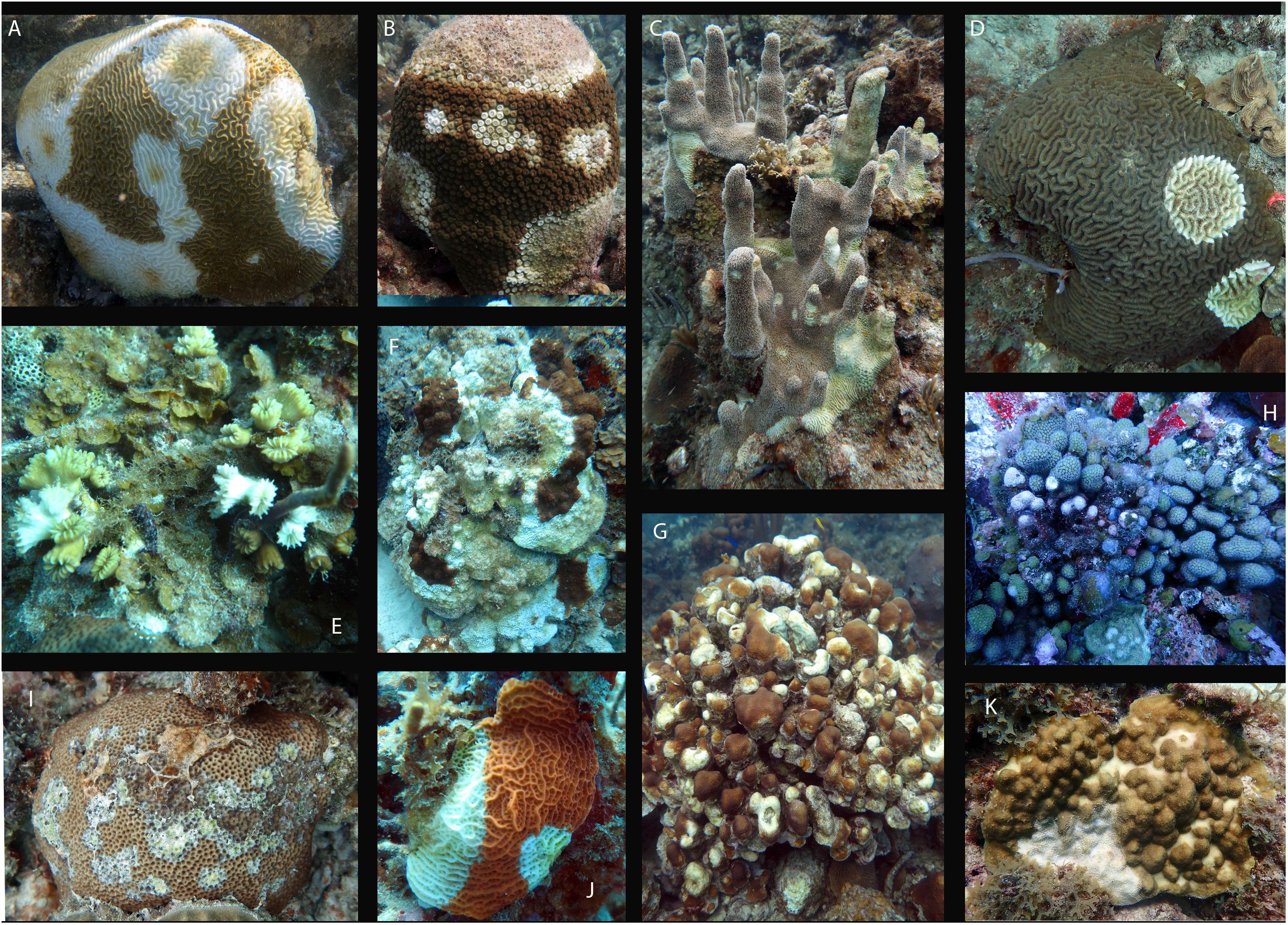
Other problems that the corals face are not so easily resolved. Some of the more common diseases you might have seen are easily identified such as Black Band Disease and White Band Disease. BBD or BP is the only successfully treatable coral disease! It is caused by a blue-green algae / cyanobacteria that basically smothers the coral with lack of oxygen. White Band Disease, on the other hand has no known root / agent and no treatment. It has been troublesome since 70s and 80s when it decimated stony coral populations. Today, it mostly affects acroporid (branching) species like elkhorn and staghorn corals.
Latest, and most deadly on the scene is Stony Coral Tissue Loss Disease (SCLTD or Skittle-D). First reported in 2014 in Keys, it is characterized by rapid multi-focal tissue loss that can advance 5-40 sq cm per day on a colony! This disease has no exact cause, virus, or bacteria yet, and it is fast-acting and extremely lethal to stony corals such as boulder brain and star corals which make up the backbone of many of the Caribbean’s Coral Reefs. Experimental treatment with antibacterial creams have been moderately successful, but treatment requires frequent reapplication and is not always successful.
While SCLTD has yet to be seen on our reefs in the Bahamas, it is very nearby in both the Florida Keys and Grand Bahama. Is it just a matter of time? So now that you’re all bummed out, what can you do? Most importantly, if you visit an area that has SCLTD it’s very important to be sure not to carry any of the causing agent with you. Disinfect your gear thoroughly between trips – use either a 10% bleach solution soak for 10 minutes, or for more sensitive equipment use antibacterial dish soap. Using reef-safe sunscreens that contain mineral active ingredients can help keep more stressful chemicals out of the water. And don’t forget to bring this awareness to your non-diving friends and family! We divers make up a small percentage of the population, but we are often the ocean’s biggest advocates.
Have you ever been on a dive and suddenly a majestic, graceful sea turtle glides effortlessly over the reef in front of you? You lock eyes, he tilts his shell towards you, showing off the beautiful pattern, and with a few flaps of his flippers is gone. And you’re left wondering… what was he thinking?
Not a lot, that’s for sure. But they do have a lot going on in those heads of theirs.
Turtles brain size is actually pretty small compared to their body size, and some animal science claims that brain to body ratios correlate with animal intelligence (i.e. sea turtles = not so bright). But while the might not have much going on between the ears (wait, do sea turtles have ears?!), there are many other things they can do that continue to baffle the scientific community. When sea turtles hatch, their brain to body ratio is higher since they are so tiny (and cute, obv.), which some believe is because at that age they are required to do a little more mental work to stay alive. And not many do! Survivorship of hatchlings to adulthood is around 0.1% due to predation, dehydration, and entanglement to name a few. As they grow older their bodies get larger but their brains don’t quite keep up. But their size makes them more difficult to eat and they rely more on their hard shells to protect them, less on their brains. The turtle you saw earlier, tilting his shell towards you? He wasn’t showing off, it was to point his built-in shield in your direction, a signal that he doesn’t quite trust you and to stay away.
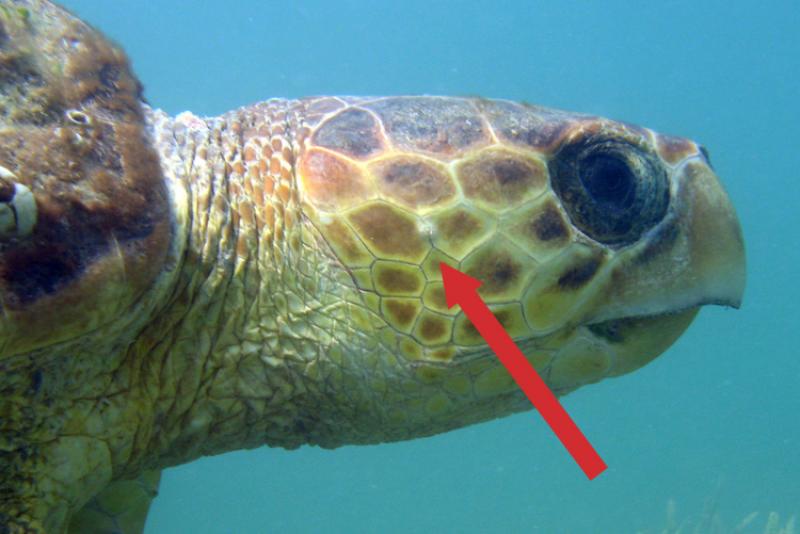
Sea turtles do in fact have ears, often presenting as a small bump just behind the eye. They are covered in a layer of hard scales and a layer of far, which makes them much more attune to hearing sounds (vibrations) underwater than above. Sea turtles are known to be one of the least vocal animals on the planet so they really don’t need to hear much. But they have other senses that are much more important, and much less understood.
They rely on instinct for most of their adult lives, and use other organs and glands to get things done. Just in front of their brain is a pineal gland that it is believed help some species of sea turtles migrate. The gland is located under a thinner area of the skull and detects light in many other species of animals. In mammals the gland is know to regulate circadian rhythms, but in sea turtles its possible that it measures available environmental light and cues the turtle when it is time to head north/south to migrations grounds or feeding grounds.
On either side of their brain – each one being significantly bigger than the brain itself – are the turtle’s two lachrymal or salt glands. These glands help regulate sodium levels in the turtle’s body. Being immersed in the sea 99% of their lives, and not able to rely entirely on their kidneys to excrete any salt from their consumed diets, these glands are constantly discharging salt from their bodies. If these glands ever become clogged or malfunction, elevated sodium levels can cause major neurological damage and even death. So, arguably they are much more important than the brain! You can see them working when female turtles come on land to nest – they look like they are crying as the salt discharges from each eye.
For their final trick, sea turtles – like migratory birds – have a magnetic sense that is still not completely understood. Even as hatchlings, they can sense the earth’s magnetic field, though at this point it is probably only used only to pick a direction and go. Adults can hone that sense to detect magnetic landmarks and subtle changes in magnetic fields, and use it to find the same nesting grounds year after year – even as the earth’s magnetic field changes! Scientist can prove that the turtles do use and respond to magnetic fields, but have little to no idea physiologically how they do it.
So next time you see a sea turtle, give a little tip of your beanie for how amazing they truly are. And if they flash their shell at you, give ’em a little space.
https://julietsailinganddiving.com/wp-content/uploads/2024/01/Juliet-52-scaled.jpg19202560Juliet Sailing and Divinghttps://julietsailinganddiving.com/wp-content/uploads/2020/10/juliet-logo-dark.pngJuliet Sailing and Diving2024-01-19 12:43:442024-01-19 12:44:46Sea Turtles: More Than You Ever Wanted to Know

 This photo might not look like much, but it is from the first officially-reported sighting of a Yellow Cheek Wrasse in the Bahamas, made by us! We had to send proof to the Reef Fish ID folks, and unfortunately all we had was this terrible photo from a GoPro video. When we initially sent our fish survey in they literally said “Are you sure…? That’s definitely outside their reported range…”
 I’ve spent quite a lot of this Spring traveling: five trips to Bimini on Juliet, and 2 weeks in Indonesia, and about to head out to the Keys. And you know where I can’t wait to get back to? Bimini. Where I learned to dive 22 years ago, where I’ve logged 2000 of my 2500 dives, where I spent five of the past 10 weeks, a place you would think I’d be totally sick of by now. But last week, we saw two


 Sea turtles
 For their final trick, sea turtles – like migratory birds – have a


